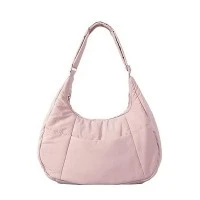
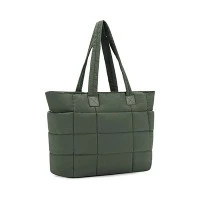
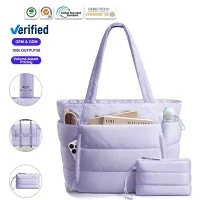
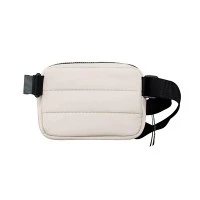
How to find a professional manufacturer of eco friendly RPET bags in China?
When we create a bag product, What's the best material for bags? Which is the best sustainable material for environment? We often need to consider at things on a material selection and product positioning. We know most products we make will have an impact on the environment, but we are working on methods to reduce this as much as we can.
What Is RPET?

Environmental protection starts from the "RPET bag".
RPET - short for recycled polyethylene terephthalate is a new reusable and sustainable material. There is a term used to describe any material recycled from the virgin PET plastic commonly used in food and beverage packaging, and particularly plastic drinks bottles. This can contain either pre or post-consumer waste.
So to understand exactly what RPET is, we really need to start with PET.
PET plastic has become ubiquitously popular as a packaging material since its invention in the mid-20th century thanks to its useful properties - it's lightweight, flexible, durable, shatterproof, and cheap to produce. And now it is used to manufacture, amongst other things, over 500 billion drinks bottles every year.
Why should we recycle PET?
Recyclable, durable, lightweight, and nontoxic, PET is a highly versatile material that's used in countless applications, making it one of the world's most popular plastics. But there are a lot of downsides associated with its proliferation.
The raw materials for PET are derived from crude oil and natural gas, which following extraction, are then processed into resins suitable for plastic production. For PET, its high durability means it takes five to seven centuries for it to begin to break down if it ends up in landfills. This low degradation rate, alongside the increasing volume of PET production, has rendered it a contributor to the plastic waste crisis the world is facing today.
With the development of science and technology, the processing technique of PET developed greatly. The industry increased production and overbuilt in multiple regions of the world, most notably Asia.
Ultimately, the manufacture of one kilogram of PET can produce as much as three kilograms of carbon dioxide. This equates to one 500ml plastic bottle of water carrying its own carbon footprint of 81g of CO2.
On top of this carbon footprint, the production of PET also generates way more toxic emissions (including nickel, ethylbenzene, ethylene oxide, and benzene) than manufacturing other alternative materials like glass. According to Ecology Center, producing a 500ml PET bottle generates more than 100 times the toxic emissions of producing the same sized bottle from glass.
Then we are having the problem of what to do with the bottle after its use has been fulfilled.
PET take much longer to decompose since they require UV light to break down, not bacteria, meaning that once each bottle has been used and discarded, if left to its own devices, it is thought that it could take upwards of 450 years for PET bottles to decompose in landfill conditions.
And landfill sites filling up with PET isn't the worst of it. Failure to dispose of plastic bottles carefully and conscientiously has resulted in them clogging waterways, and filling oceans and lakes around the world.
According to Ocean Conservatory, every year, 8 million metric tons of plastics enter our ocean to add to the existing estimated 150 million metric tons that currently circulate in our marine environments.
Although we've established that PET doesn't biodegrade easily, once exposed to the elements of nature (and particularly sunlight), PET is subject to a fragmentation process which can quickly lead to the creation of microplastics.
So plastic pollution has become one of the most pressing environmental issues, and has an incalculable impact for marine life and the marine environment, as well as showing mounting evidence of threats to human health.
The good news - what we can do together to combat PET pollution
Pollution isn't slowing down. In fact, it's getting worse every single day, and it's getting harder to combat the overwhelming effects on our planet.
Stopping pollution begins on an individual level, which in turn will rise to a collective level, provided enough of us change our habits for the better.
There are a number of ways we can work to protect the environment from plastic bottle, bag and packaging pollution.
To start with the little things in daily life, we can collectively choose to consume less, selecting alternatives to plastic-packaged food and drinks. We can also reuse and refill bottles rather than buying new ones each time we get a thirst on.
We can also look to limit the amount of PET being produced globally by lobbying our local political representatives to propose and support legislation regulating plastic production.
And whilst we're working to reduce consumption, we can use biodegradable, eco-friendly products are better for the environment, but biodegradable products are great for the environment.
One mitigating benefit of PET is that it is very readily recyclable. PET can be recovered and recycled repeatedly through a process of washing and remelting for use in new PET products, or by breaking it down chemically into its raw materials, for purification and conversion into new PET.
And this new recycled material is our titular RPET. One of the biggest problems with plastic bottles is the use of virgin plastic. Using rPET will reduce the need for virgin plastic.
What’s the production process of RPET fiber?
Polyester Staple Fiber (PSF) / dacron is Polyester Fiber made directly from PTA and MEG or PET Chips or from Recycled PET Bottle Flakes. Manufacturer makes recycled polyester, which also known as rPET, by melting down existing plastic and re-spinning it into new polyester fiber. Manufacturer can make recycled polyester staple fiber (RPSF / RSF) from plastic bottles scraps.

The process to make RPET begins with collecting sources of PET, which in this case is plastic water bottles:
Step 1: PET bottles are collected and sterilized.
Step 2: The bottles are dried out and crushed up into tiny, chip-sized pieces.
Step 3: The pieces of PET are heated up and pushed through a spinneret to form long strands of yarn.
Step 4: The PET yarn is wound onto spools and sent through a crimping machine. The crimping step is what gives the yarn a fluffy texture.
- Step 5: The PET yarn can then be baled, dyed to the desired color, and knitted into fabric.

The main advantages of using rPET fabric
There are a lot of advantages to using RPET. Since it’s so similar to virgin polyester, it’s like it’s the same material in terms of the benefits it offers.
1. Durable
Recycled polyester fibers are strong and tightly interwoven, which makes RPET a durable bag fabric. It will hold up to a lot of wear and tear as you take it on your travels, run errands with it, carry laptop, books or work supplies in it, or even take it hiking and backpacking.
2. Moisture Resistant
Moisture resistance is a key quality in a bag fabric. Just like virgin polyester, RPET wicks away moisture droplets from water or other liquids. It also doesn’t absorb liquid, meaning it dries quickly after getting wet. This makes it a perfect material for bags and backpacks that you take with you out in nature, as there is always a possibility you will get rained on or splashed with water from a puddle.
3. Elastic
By being elastic, recycled polyester holds its shape well and will not lose that shape or become wrinkly, even if it gets pulled on or bulges outward. A bag needs this quality so that it can contain bulky items and be carried around in all types of environments, while still keeping its original structure.
4. Heat Resistant
Recycled polyester is resistant to heat, meaning that it takes a lot of heat to get it to burst into flame.
5. Sustainable
Recycled polyester is far more sustainable than virgin polyester.
Virgin polyester is made from substances that are derived from petroleum. Petroleum refineries cause a vast amount of pollution in our air, water, and soil. Meanwhile, the factories that synthesize PET and produce polyester are known to waste tons of energy while producing wastewater filled with toxins that they don’t treat.

The concept of eco-friendly, low-carbon, sustainable development has its roots in the Green Field was founded in 2010,all of Green Field team can contribute to the environment and try to make it a better.
rPET fabric are one of the most eco-friendly, sustainable solution alternatives to replace virgin polyester and more general disposable plastic.
Requires 85% less energy
65% fewer emissions: 50-65% less Carbon and Sulphur Dioxide
Requires 90% less water
Under normal conditions in nature, plastic bottles (usually made of polyethylene, also known as PET, or polyethylene terephthalate) will begin to break down only after 500-700 years and even then, the process will be very slow. Plastic bags will begin the process only after a thousand years. Plastic bottles take about 700 years to decompose, so getting them out of landfills and waterways is extremely important. In the decomposing process, the bottles are not completely broken down. Consequently, they become tiny microplastic pieces. Even if we can’t see them, they still harm the ecosystem.
Recycled PET is not yet a perfect solution, but it does still find new life for plastics. Creating a new life for plastic water bottles is a great start. On top of shoes and clothing made from rPET fabric, reusable shopping bags can also be created from this material; using shopping bags made from this material also cuts down on single-use plastic bags . Considering its pros and cons, rPET is the more sustainable option.
Using sustainable RPET fabric is a great idea if it is manufactured correctly. With increasing attention to the amount of plastic waste in the oceans and landfills, some cleaning companies have emerged to help reduce our carbon footprint. The energy required to produce RPET fabric is 33-53% less than that of virgin polyester fiber.
Because of this fabric, plastic materials, especially water bottles are preserved from our oceans and landfills.
Why to choose Green Field?


Which bags would you like to learn more about?
Green Fied focus on products made of sustainable eco friendly recycled polyester (rPET) fabrics, the main products as below:
Shopping Bags
Reusable Shopping Bags
Custom Boxes
Plastic Shopping Bags
Handbags
Cooler Bags
Messenger Bags
Evening Bags/Clutch Bag
Tote Bags
Toiletry Bags
Beach Bags
Yoga Mat Bag
Gym Bags
Sports Duffel Bags
Gym Bags
Travel Duffel Bags or more
Do you have questions? Any Suggestions?
Or maybe you just want to talk?
Please feel free to contact us using the form below or directly via email to sales@greenfield.cc
We look forward to hearing from you!