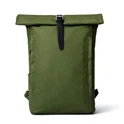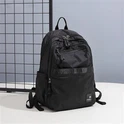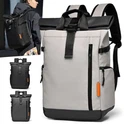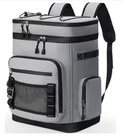
The global luggage and bag industry in 2026 will be shaped by increasing consumer demand for sustainability, the integration of smart technology, a return to larger, more practical-sized bags, and a rise in personalization and customization. Brands will focus on eco-friendly materials, modular designs, and innovative features like GPS trackers to meet evolving consumer needs and regulatory standards.
Key Trends for 2026 Bags
Sustainability and Eco-Friendly Materials:Consumers are increasingly prioritizing sustainable products, leading to a greater demand for luggage made from recycled and biodegradable materials. Brands are responding by investing in eco-friendly manufacturing and circular economy models.
Smart and Technologically Advanced Bags:The integration of technology, such as GPS trackers, IoT connectivity, and AI-powered organizational systems, will become more standard, providing convenience and security.
Return to Larger, Practical Bags:Following a trend of mini handbags, larger, more relaxed, and unstructured bag styles are making a comeback, with a focus on hobo and unlined designs.
Personalization and Modular Designs:Consumers are looking for unique products, driving a trend toward modular, customizable luggage systems.
Experiential Travel:The growing trend of experiential travel is increasing the demand for specialized luggage designed for various types of trips.
Focus on Design and Durability:Travelers are seeking bags that offer both durability and fashion-forward designs, transforming travel bags into style statements.
Digital Transformation:Data-driven decision-making and digital transformation are essential for market players to gain a competitive edge and better understand consumer behavior.
1. Technology Empowerment: Smart Luggage's and Bags Reshapes the Travel Experience
As technology and fashion merge, the functional boundaries of luggage and bag are radically transformed. Smart tracking luggage is becoming a hot topic. An international brand has launched a suitcase with a built-in GPS chip and Bluetooth technology. This allows real-time tracking of the luggage's location via a mobile app, and sends an immediate alert if the luggage leaves a safe range. Another backpack, equipped with a health monitoring system, tracks exercise data, heart rate, and body fat percentage in real time, becoming a new standard for healthy urban living.
On the manufacturing side, 3D printing technology is disrupting traditional production models. 3D-printed luggage, made from lightweight carbon fiber, uses AI algorithms to optimize its structure, achieving a perfect balance between complex geometric shapes and high strength. The integration of a fully automated intelligent cutting machine and an AI sewing system reduces the customized production cycle from 30 days to 72 hours, and reduces the minimum order quantity per item to just one piece, providing technological leverage for small and medium-sized brands to enter the personalized market.
II. Green Revolution: Sustainable Design Leads Industrial Transformation
Driven by the global goal of carbon neutrality, environmentally friendly technology has become a core focus for the luggage and bag industry. The exhibition featured a dedicated "Green Ecology Zone" showcasing recycled materials and recycling technologies. One brand's stylish backpacks, crafted from recycled plastic bottles, consume 12 discarded bottles each, reducing their carbon footprint by 60% compared to traditional products. Another handbag, made from bio-based leather cultivated with mycelium, not only boasts a natural texture but is also completely degradable in soil.
Green innovations in the production process were equally eye-catching. One company showcased a solar-powered sewing machine, powered by photovoltaic panels on the luggage's surface, achieving zero-energy production. The widespread use of environmentally friendly water-based paint has reduced wastewater discharge from the luggage dyeing process by 90%. These technological breakthroughs are driving the industry's shift from "end-of-pipe treatment" to "source-of-carbon reduction."
III. Design Awakening: The Creative Explosion of Cultural IP and Cross-Border Integration
With Generation Z becoming the primary consumer force, design innovation has become key to brand success. The collision of intangible cultural heritage elements and modern aesthetics has unleashed a striking energy. For example, a brand collaborated with a Suzhou embroidery inheritor to create the "Jiangnan Misty Rain" handbag series, combining traditional needlework with AR technology. Consumers scan the bag's surface to view a virtual embroidery animation and collect a limited-edition digital collectible. This is a classic commercial example of "cultural IP + technology empowerment."
Cross-border collaborations have become a "social currency" for young consumers. A collaboration between an anime IP and a luggage brand incorporated virtual character elements into the backpack design, featuring a detachable LED light board and temperature-controlled cup holder, becoming a highly sought-after check-in item at the exhibition. A collaborative suitcase from a sports brand and an automotive manufacturer, crafted from aircraft-grade aluminum alloy and carbon fiber, features a built-in wireless charging module and smart locking system. Despite exceeding 10,000 yuan per unit, it remains in short supply.